

The Hustle Before the Hits: How Day Jobs Built Hip-Hop, R&B, and Pop Legends
Chris_Hocking
The flashy version of the come-up is the one that gets the most play. The natural-born star who walked into the booth already sounding like a headliner. The artist who never had to clock in because the culture just knew. That story exists, but it is not the dominant one—especially in hip-hop, R&B, and the corners of pop that grew out of real-life survival.
More often the story looks like this: someone worked a regular job, hated parts of it, used the paycheck to fund studio time or keep the lights on, wrote bars or melodies on breaks, and kept showing up until the music became impossible to ignore. The “accountant who believed” energy lives just as strong in the short-order cook, the correctional officer, the Gap associate, the Red Lobster waitress, and the kid sweeping hair in his mother’s salon.
These are not side notes. They are the foundation.
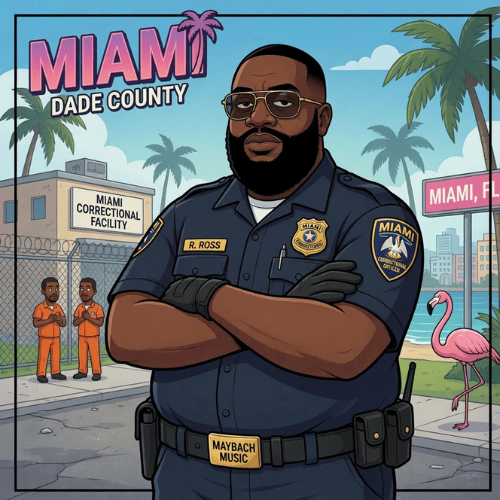
Rick Ross: From Officer Ricky to the Boss
Before the Maybach Music empire, the diamond chains, and the larger-than-life persona, William Leonard Roberts II worked as a correctional officer in South Florida. The job has followed him for years—sometimes as a gotcha, sometimes as a meme—but it was real. He put in time in the system that many of his records would later critique or mythologize.
That stretch of ordinary employment did not make him less authentic. It gave him a view of power, control, and consequence that later showed up in the music. The man who would become “the Boss” first learned what it felt like to wear a uniform and follow rules he did not write. When the music finally hit, the shift from that world to the one he built felt earned rather than gifted.
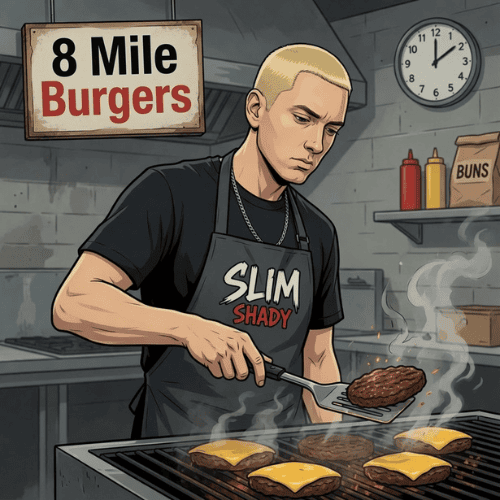
Eminem: Flipping Burgers and Stamping Parts on Eight Mile
Marshall Mathers dropped out after repeating ninth grade and worked the kind of jobs that keep a young parent and a struggling household afloat. He was a short-order cook and dishwasher at Gilbert’s Lodge in St. Clair Shores, Michigan. Co-workers later remembered him rapping orders back or freestyling while working the grill. He also put in time at a machinery factory, the kind of industrial labor that later informed the 8 Mile narrative.
The contrast is almost too perfect. The same hands that flipped burgers and handled factory work would later write some of the most technically dense and commercially dominant rap of the era. The day job did not create the talent, but it forced a level of discipline and observation. When the breakthrough finally came with The Slim Shady LP, it carried the weight of someone who had already done the unglamorous work of keeping a household running.
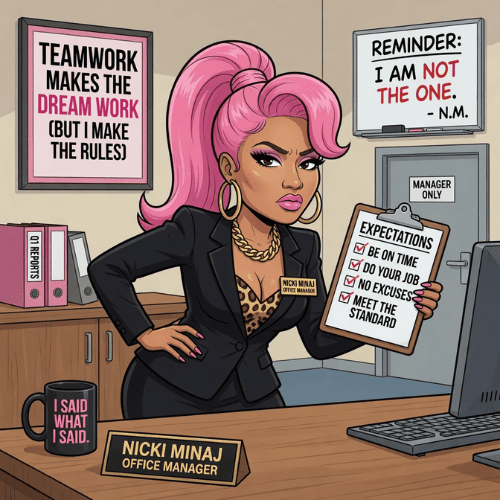
Nicki Minaj: Red Lobster and the Office Manager Who Wouldn’t Fold
Onika Maraj has been open about the string of jobs she held while chasing acting and music in New York. The most famous is the Red Lobster waitressing gig that ended with her chasing a customer out of the restaurant over a stolen pen and flipping them off. She has said she was fired roughly fifteen times across different roles, including an office manager position that became the final straw.
The attitude that got her fired from service jobs is the same energy that later made her one of the most dominant and polarizing figures in rap. She did not soften herself to keep a paycheck. She treated the jobs as temporary scaffolding while she built the version of herself that would not be denied. The Red Lobster stories are funny in retrospect, but they also show a young woman who refused to disappear into the role of “good employee.”
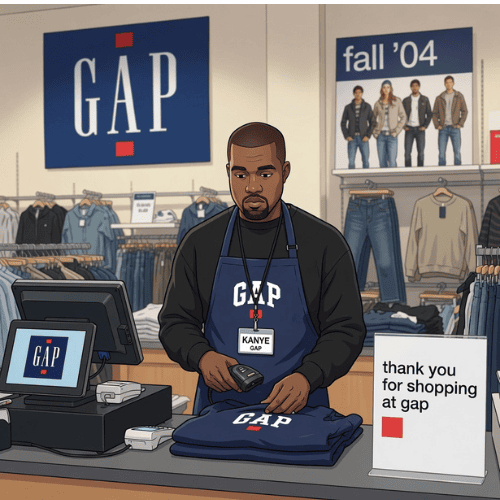
Kanye West: The Gap Associate Who Wrote “Spaceship”
Before the fashion houses, the stadium tours, and the cultural earthquakes, Kanye worked as a sales associate at Gap in Chicago. He referenced it directly on “Spaceship” from The College Dropout: the small checks, the feeling of being stuck, the sense that the real work was happening somewhere else. The job was ordinary retail. The frustration of watching time pass while creativity waited became part of the early mythology.
Kanye’s path also included production work that paid bills before the rapping fully took off. The Gap chapter sits in that larger pattern—practical work funding the long game until the music could stand on its own.
Method Man, J. Cole, Tyler, and the Quiet Grind
Clifford Smith, better known as Method Man, spent years working at the Statue of Liberty. He has joked that he never even went inside because the break was too short. The image of a future Wu-Tang legend directing tourists or handling the logistics of one of America’s most visited monuments is almost surreal, and that is exactly why it matters. The job was regular. The ambition was not.
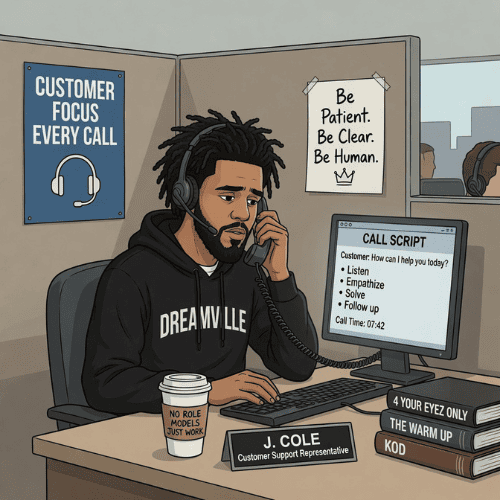
J. Cole worked as a bill collector during the recession, cold-calling people about debts while writing the music that would eventually make him one of the most respected lyricists of his generation. Tyler, the Creator put in time at Starbucks (where he admitted to stealing cheese Danishes) and a short, depressing stint at FedEx that convinced him he needed a different path. Kid Cudi worked retail at places including Dean & DeLuca and later fashion spots like Bape. Pharrell got fired from McDonald’s multiple times as a teenager because he treated the job with the exact amount of seriousness it deserved from someone who already knew music was the real assignment.
These are not glamorous origin stories. They are the working-class texture of hip-hop’s rise—the hours that funded the next session, the shifts that taught patience, the jobs that made the eventual success feel like a genuine escape rather than an entitlement.
Beyoncé, Madonna, and the Pop Side of the Same Coin
The pattern is not limited to rap. Beyoncé’s first real work was sweeping hair and helping out in her mother Tina Knowles’s Houston salon. Destiny’s Child performed for clients while the women got their hair done. The salon was both a workplace and an early stage. That environment of Black women building businesses and community became part of the foundation for one of the most successful careers in modern music.
Madonna lasted about a week at a Dunkin’ Donuts in New York before getting fired. The story has become legend—partly because it is so ordinary. The future Queen of Pop was just another young person trying to stay in the city long enough for something to break. Summer Walker cleaned houses before the R&B breakthrough. Calvin Harris stacked shelves while trying to make connections in London.
The through-line is the same: practical work that kept the dream breathing until the music could pay the bills itself.
The Rock Chapter
The principle does not belong to one genre. Serj Tankian of System of a Down built and ran a company that developed specialized accounting software for the jewelry industry before selling it so he could focus on music. Mick Jagger studied accounting and finance at the London School of Economics while the Rolling Stones were still forming. Kurt Cobain worked as a janitor for Lemon’s Janitorial Service in Aberdeen, cleaning toilets and hallways while Nirvana was still a local band.
These stories sit lower in this version of the article not because they matter less, but because the hip-hop and R&B examples carry a particular cultural weight right now. The grind, the side hustle, the refusal to let a day job define the whole identity—these themes are native to the culture that produced Rick Ross, Eminem, Nicki, Kanye, and the rest.
Consistency Until Denial Becomes Impossible
What ties every one of these artists together is not the specific job. It is the posture. The day job was rarely the dream. It was the support system that kept the dream alive. They wrote on breaks, recorded after shifts, used paychecks for studio time, and treated the ordinary work as temporary even when it felt permanent.
Hip-hop culture has always understood this better than most. The mixtape funded by a retail check. The bars written on the bus home from a shift. The refusal to let the 9-to-5 become the final story. The accountant energy—the belief that is quiet, consistent, and ultimately undeniable—shows up just as clearly in the correctional officer, the short-order cook, the Gap associate, and the salon sweeper.
The flashiest people are not the only ones who make it. Sometimes it is the person who kept showing up to the ordinary job, protected the real work in the margins, and stayed consistent until the music could no longer be denied. That is not a lesser story. In many ways, it is the more useful one.
DO YOU MAKE MUSIC? THE INDIY MISSION
Indiy exists to help people create great music!
Did you know 40 thousand songs are uploaded to Spotify every day!
We want to hear about what you do, what makes you special and share it with the world!
Submit to be interviewed for Indiy Spotlight, its 100% FREE Just click here for your music interview
If you are working on new material, we have partnered with Audio Mastering to offer mastering on your next release from just £2 per song (approx $2.75 USD) - Check the offer out here
Search all articles

Chris_Hocking
Founder of Indiy I believe that Independent musicians can make music and make money. Without money, there is no art! I believe together we can build a new better music industry
Follow Indiy